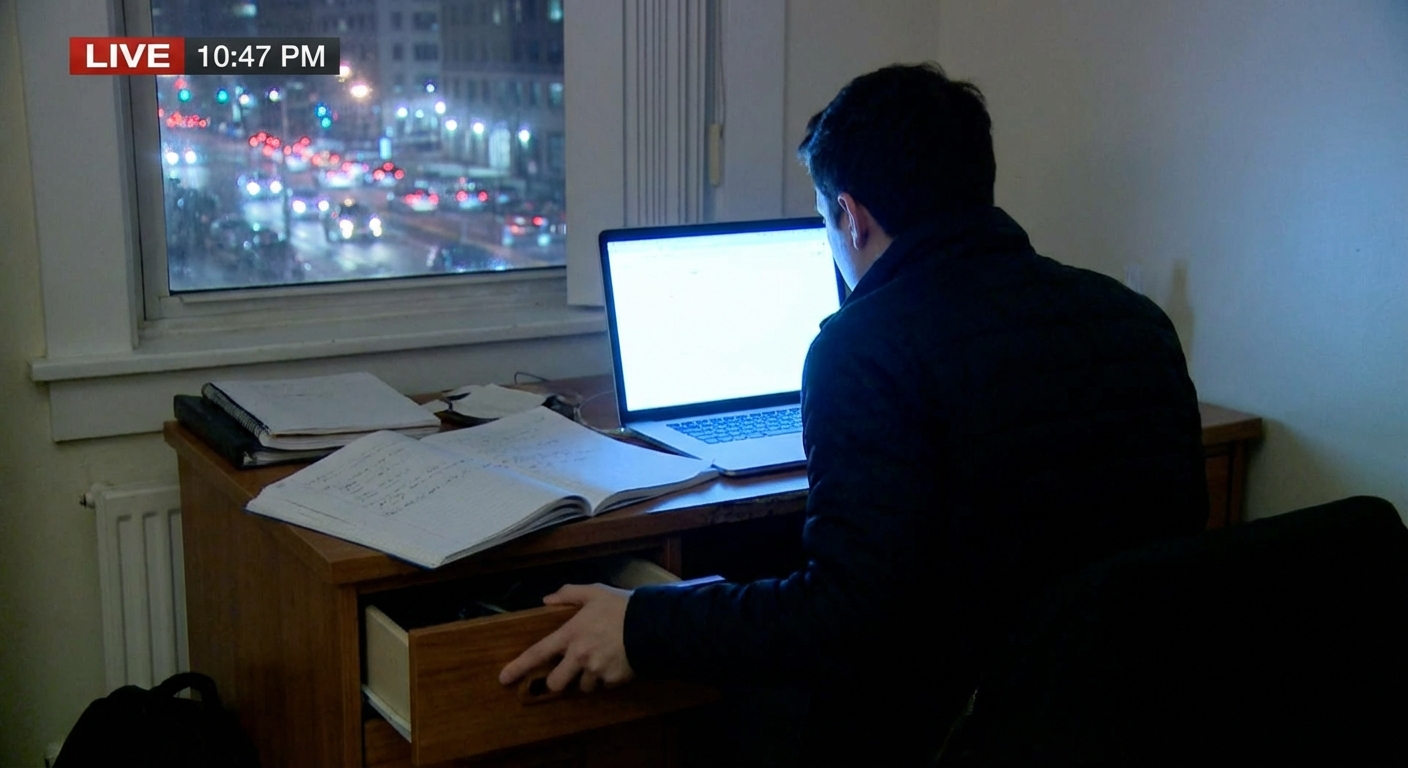
If your day is a blur of messages, quick tasks, and shallow progress, that’s not a personal failing. It’s the default configuration of modern work: maximize visibility, responsiveness, and surface activity.
Why Your Current Way of Working Isn’t Accidental
Deep work demands you run a different configuration—one that most environments will not hand you by default. You have to build it yourself.
This is a 30-day, stepwise guide to construct a sustainable deep work routine. Not an idealized fantasy schedule—something that can coexist with meetings, family, and obligations.
The Core Principle: Start with Constraints, Not Ideals
Most deep work advice fails because it starts from the question, “What would my perfect day look like?” That’s irrelevant. The better question is:
> “Given my current constraints, what is the maximum reliable deep work I can protect?”
Design from reality upward, not aspiration downward.
We’ll move in three stages:
- Observation (Days 1–7) – Understand your current attention patterns.
- Insertion (Days 8–21) – Add small, non-negotiable deep work blocks.
- Expansion (Days 22–30) – Increase duration and difficulty, and handle resistance.
Stage 1: Observation (Days 1–7)
You can’t improve what you haven’t measured. For one week, don’t try to "fix" your workday. Just observe.
Step 1: Daily Attention Log
Use a simple sheet or notebook. During your workday, every hour, jot down:
- Main activity (e.g., "email", "coding", "meeting", "scrolling", "writing").
- Depth rating (1–3 scale):
- 1 = shallow (reactive, low concentration).
- 2 = medium (some focus, moderate difficulty).
- 3 = deep (high concentration on a demanding task).
At the end of each day, total how many hours you spent at depth 3.
Most people are surprised: it’s often less than 1 hour.
Step 2: Identify Natural High-Energy Windows
Across the week, note when you felt mentally sharpest:
- Morning? Late night? After a walk?
- When were you least interrupted?
- When did work feel easiest to enter flow?
These windows will become your deep work anchors.
Step 3: Name One High-Value Problem
Before you touch your schedule, pick one problem or project that deserves deep work. Criteria:
- It’s important in a 6–12 month horizon.
- It’s cognitively demanding (you can’t do it half-distracted).
- Progress is currently slower than it should be.
Examples:
- Completing a book chapter.
- Designing a new product feature.
- Learning a difficult skill (e.g., systems design, data science, a language).
- Building a new sales or content engine.
You will direct most deep work toward this, at least initially.
Stage 2: Insertion (Days 8–21)
Now you create small but strict deep work commitments.
Step 4: Commit to 30–60 Minutes Daily
Pick a consistent time slot, ideally within one of your high-energy windows, and protect 30–60 minutes for deep work on your chosen problem.
Rules for this block:
- No phone, no email, no messaging.
- One task only.
- Clear, specific objective at the start (e.g., "Outline section 3", "Implement core algorithm", "Draft 1,000 words").
These 30–60 minutes are non-negotiable. You’re not chasing heroics; you’re proving reliability.
Step 5: Design a Pre-Work Ritual
Your brain needs a clear signal: now we go deep.
Keep it simple (5–10 minutes):
- Clear your physical workspace.
- Close all unrelated browser tabs and apps.
- Write your objective for the session on paper.
- Set a timer for the block.
Repeat the same sequence each time. Repetition makes depth easier to access.
Step 6: Protect the Block Publicly
Tell the relevant people in your work life:
- "From 9–10 a.m. I’m heads-down on [X]. I’ll be slow to respond during that time, but I’ll catch up afterward."
Add it to your calendar so others see it. You’re training expectations.
Step 7: Track Output, Not Just Time
Each day, log:
- Did you complete your deep work block? (Y/N).
- What did you produce? (code, pages, decisions, designs).
- Subjective depth (1–3).
By Day 14, you should have:
- 7–10 completed deep work sessions.
- Concrete artifacts that didn’t exist before.
If you keep breaking the block, diagnose:
- Timing off?
- Environment too noisy?
- Task too vague or too intimidating?
Adjust accordingly. Don’t abandon the practice.
Stage 3: Expansion (Days 22–30)
Once the habit exists, you increase its ambition.
Step 8: Extend Duration or Add a Second Block
Based on your experience:
- If 60 minutes felt sustainable: extend to 90.
- If 60 minutes felt hard but doable: keep duration and add a second shorter block later in the day (30–45 minutes).
The goal by Day 30: 90–120 minutes of deep work on most weekdays.
Step 9: Increase Problem Difficulty
Don’t let deep work become medium work.
Ask weekly:
- Am I choosing tasks that require my best thinking?
- Have I defaulted to polishing or tinkering instead of tackling uncertainty?
If you notice avoidance, explicitly schedule your scariest subtask at the start of a block.
Step 10: Build Recovery into the System
Deep work is metabolically expensive. You can’t just stack it endlessly.
Add deliberate recovery:
- Short walk after a deep session.
- No multitasking during breaks (let your mind idle).
- Reasonable sleep and boundaries on nighttime work.
This recovery is what allows tomorrow’s deep work to exist.
Handling the Most Common Failure Modes
1. “My job is too interrupt-driven.”
Some roles genuinely require responsiveness. But even in these, there is often unclaimed slack.
Options:
- Negotiate coverage windows with teammates (you cover afternoons, they cover mornings).
- Start with 30-minute micro-blocks when interruptions are least likely (e.g., early morning, lunch hour).
- Use office-hours patterns: "I check Slack and email at X, Y, Z times." You probably overestimate how often you must respond instantly.
2. “I can’t stay focused that long.”
This is not a moral issue; it’s conditioning.
Techniques:
- Start with 25-minute pomodoros inside your block.
- When you feel the urge to check something, write it down instead of acting on it.
- Expect discomfort. The first 10 sessions are often the worst.
3. “I get stuck and waste the session.”
Being stuck is part of deep work, not a sign of failure.
Use structured fallback steps:
- Write down the exact question you’re stuck on.
- List three possible next actions, even if imperfect.
- If you truly cannot move, use the remaining time to clarify the problem, not to switch tasks.
What Changes After 30 Days
If you commit honestly to this experiment, after a month you’ll notice:
- Your best work is no longer constantly postponed.
- You have tangible artifacts: drafts, designs, models, code, or decisions.
- Shallow work feels easier to contain because it has been demoted from center stage.
More importantly, you’ll have evidence: you can, in fact, sit with hard problems regularly, despite constraints.
From there, scaling deep work is straightforward:
- Increase your daily quota gradually.
- Redirect more of it to even higher-leverage problems.
- Defend it as a core part of your professional identity.
You don’t need to be extreme. You need to be consistent. Deep work is less about heroic sprints and more about a quiet, durable refusal to let your best hours be spent on your worst tasks.